
You’re texting back and forth, everything feels normal, and then it lands: 💙. No words, just a little blue heart sitting there in the chat. So now you’re staring at your screen wondering what it actually means.
A lot of people wonder the same thing every day. Here’s the truth: blue hearts mean in text something calmer and more grounded than the fiery red heart ❤️.
They lean toward trust, loyalty, friendship, and quiet affection rather than passion. But context always changes the story, and that’s exactly what we’re going to unpack below.
By the end of this guide, you’ll know exactly how to read a blue heart 💙, when to send one yourself, and how it compares to the newer light blue heart 🩵. Let’s get into it.
What Do Blue Hearts Mean in Text? 🤔
At its core, blue hearts mean in text a mix of calm love, trust, and platonic connection. It’s one of the “safe” heart emojis — the kind you can send to almost anyone without triggering an awkward “wait, are we dating now?” conversation.
Here’s a quick breakdown of the core meanings:
- 🤝 Trust and loyalty — often linked to the phrase “true blue,” meaning faithful and dependable
- 👬 Friendship and brotherhood — extremely common between guy friends who want to show love without romantic vibes
- 🌊 Calm, stable emotion — blue is associated with peace, water, and clarity, so the heart feels soothing rather than intense
- 💧 Sadness or a subdued mood — occasionally used the way people say they’re “feeling blue”
- 🎗️ Support and solidarity — used for causes, awareness campaigns, and community support
So when someone drops a blue heart into your chat, it’s rarely about fireworks. It’s about steady, dependable affection. Compared to the red heart, which screams passion, blue hearts mean in text something closer to “I’ve got you” than “I’m obsessed with you.”
Where Are Blue Hearts Commonly Used? 📱
Wondering where blue hearts mean in text conversations actually show up the most? The blue heart shows up everywhere in digital communication, but the tone shifts slightly depending on the platform:
| Platform | Common Use of 💙 |
| Texting (SMS/iMessage) | Friendly check-ins, support, thank-you messages |
| Comments on friends’ posts, bios showing calm energy | |
| Family group chats, casual daily conversations | |
| Twitter/X | Fandom support, solidarity with a cause or community |
| TikTok | Comments showing appreciation without romantic intent |
Because it’s such a neutral, low-pressure emoji, the blue heart is a favorite in group chats. Nobody reads too much into it, which is exactly why people love using it — it says “I care” without saying “I’m in love with you.”
Examples of Blue Heart in Conversation 💬
Seeing real conversations makes it much easier to understand what blue hearts mean in text compared to just reading a definition. Here are a few natural examples:
- Friend to friend: “Thanks for helping me move this weekend, I owe you big time 💙”
- Sibling check-in: “Just wanted to say I’m proud of you 💙”
- Support during hard times: “I know things are rough right now, but I’m here for you 💙”
- Fandom/community: “This team never gives up, that’s why I love them 💙”
- Subtle romantic warmth: “Talking to you always makes my day better 💙”
Notice how the emoji conveys warmth and care without the romantic intensity of a red heart ❤️. That’s the whole point — it lets people express affection while keeping the emotional temperature comfortable.
What Do Light Blue Hearts Mean in Text? 🩵
The light blue heart 🩵 is the newer sibling of the classic blue heart. It was added to keep up with the growing range of heart emoji colors, and its meaning overlaps heavily with 💙, but with a softer, gentler edge.
Key differences and similarities:
- 🩵 Feels lighter, dreamier, and more youthful in tone
- 💙 Feels slightly more grounded, mature, and “loyal best friend” coded
- Both can express platonic love, calm affection, trust, and peace
- 🩵 is especially popular in aesthetic or “soft girl” style captions on Instagram and TikTok
So while blue hearts mean in text trust and steady friendship, the light blue version leans a bit more toward gentle, dreamy affection — think beach days, calm mornings, and quiet gratitude posts.
Blue Hearts Mean in Text From Girl 👧
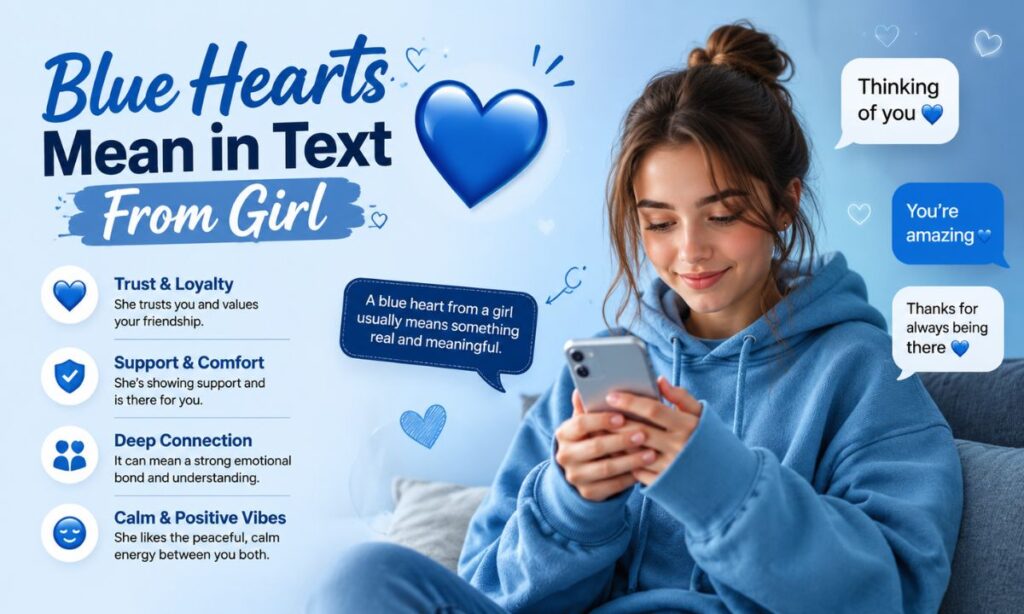
When a girl sends 💙, it usually falls into one of these categories:
- She sees you as a close, trusted friend
- She’s showing appreciation or emotional support
- She might be testing the waters before committing to something more romantic (like ❤️ or 💋)
- She could simply be placing you in the “friend zone” gently
If she uses it right after you share something personal or vulnerable, it’s likely a sincere, warm response rather than a romantic signal. Context, tone, and consistency matter far more than the emoji alone.
Blue Heart Meaning in Relationship 💑
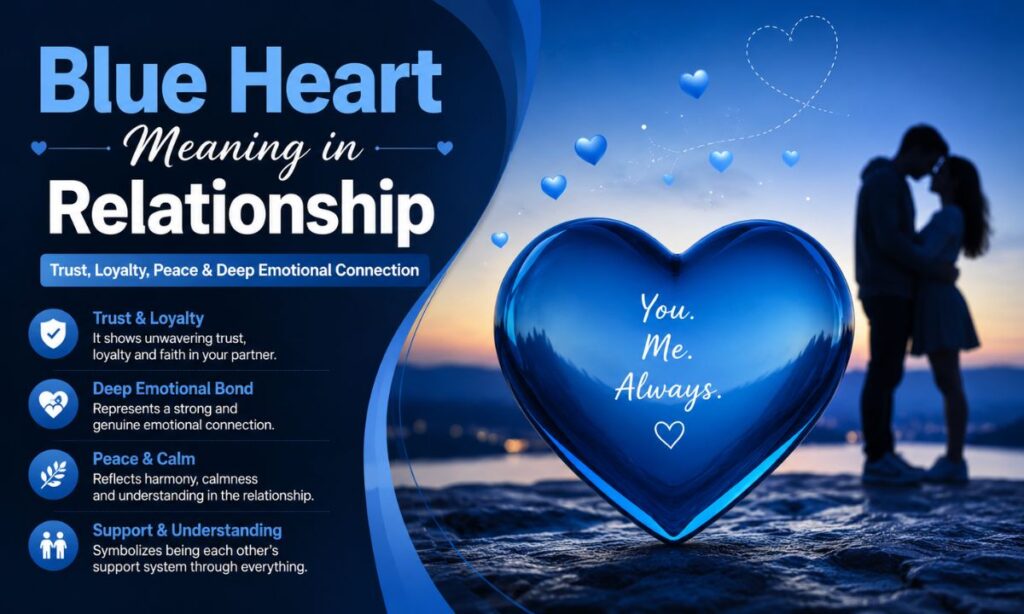
Curious how blue hearts mean in text exchanges shift once two people are officially together? Inside an established relationship, blue hearts carry something a little different than they do between casual friends. Couples often use 💙 to represent:
- Steady, secure, long-term love rather than short bursts of passion
- Trust and emotional stability built over time
- A playful mix of friendship and romance
- Support during stressful moments (“I’ve got your back no matter what”)
It’s not that the blue heart replaces romance — it’s that it highlights the calm, dependable side of a relationship rather than the intense, butterflies-in-your-stomach side. Long-term couples especially lean on 💙 to say “we’re solid” without needing extra words.
Blue Hearts Mean in Text From a Woman 👩
When trying to figure out what blue hearts mean in text from a woman, the context is similar to the “girl” scenario but often carries a bit more emotional maturity. A woman sending a blue heart typically communicates:
- Genuine emotional support and empathy
- A calm, non-romantic expression of care
- Loyalty within friendship or family relationships
- Occasionally, an early or cautious romantic signal
Because women often use emojis more expressively in conversation, the surrounding words and emojis (like 🥺, ✨, or 🫶) tend to shift the tone more than the blue heart itself does.
Blue Hearts Mean in Text From a Boy 👦
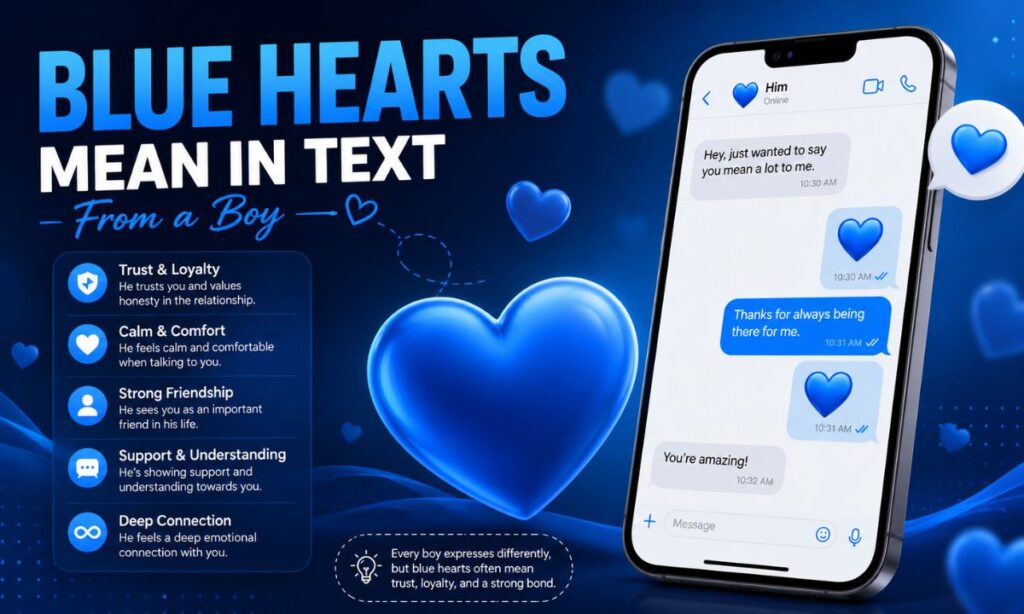
When a boy sends 💙, it usually reflects one of three things:
- Brotherhood-level loyalty — the classic “guys being dudes” energy
- Genuine friendship without any romantic undertone
- Subtle emotional openness — some guys use blue instead of red because it feels less vulnerable
Blue hearts are especially common between male friends because they allow emotional expression without feeling “too much.” It’s a safe, low-pressure way to say “I appreciate you” or “I’ve got your back.”
Blue Hearts Mean in Text From a Guy 👨
For adult men, the pattern is fairly similar to the “boy” meaning but slightly more intentional:
- In friendships, it signals loyalty, respect, and trust
- In a budding relationship, it can represent calm romantic interest without rushing intensity
- In an established relationship, it often reflects secure, steady love
If a guy is consistently using 💙 in personal, one-on-one conversation, paired with other warm language, the meaning may be gradually shifting from platonic to romantic. If it stays casual and consistent across a group chat too, it’s almost certainly just friendly.
When to Use and When Not to Use Blue Hearts ✅❌
Knowing what blue hearts mean in text is only half the battle — knowing when to actually send one matters just as much. Here’s a simple table to keep things clear:
| Situation | Should You Use 💙? |
| Thanking a friend for their support | ✅ Yes, perfect fit |
| Comforting someone going through a hard time | ✅ Yes |
| Showing loyalty to a sports team, brand, or cause | ✅ Yes |
| Expressing deep romantic passion | ❌ Use ❤️ instead |
| Trying to clearly express strong new romantic feelings | ❌ Might send mixed signals |
| Casual group chat banter | ✅ Yes |
The blue heart is one of the safest emojis in your keyboard — but it’s not built for high-intensity romance. If you want to be crystal clear about passionate love, red is still the universal choice.
Other Meanings of Blue Hearts 🎗️
Beyond personal texting, blue hearts carry a few broader cultural meanings:
- Autism awareness — blue has historically been associated with autism awareness campaigns
- Water and nature themes — used in posts about oceans, beaches, and travel
- Winter and cold aesthetics — pairs naturally with snowy or icy visuals
- Team spirit and fandom — supporting a sports team or brand whose color is blue
- Emotional lows — occasionally used to express feeling down, echoing the phrase “feeling blue”
This versatility is exactly why the emoji is so widely used — it adapts to almost any calm, sincere emotion.
Similar Emojis or Alternatives 💚💜🩷
If you’re not sure blue is the right fit, here’s how it compares to other heart colors:
| Emoji | General Meaning |
| ❤️ Red Heart | Passionate, romantic love |
| 💙 Blue Heart | Trust, loyalty, calm platonic love |
| 🩵 Light Blue Heart | Soft, dreamy affection, peace |
| 💚 Green Heart | Jealousy, nature, sometimes friendship |
| 💛 Yellow Heart | Friendship, warmth, familial love |
| 💜 Purple Heart | Compassion, sensuality, deep bond |
| 🩷 Pink Heart | Sweetness, gentle affection, cuteness |
| 🖤 Black Heart | Dark humor, sorrow, or edgy affection |
Choosing the right heart color can actually change how your message is received, so it’s worth thinking about which one matches the emotion you’re going for.
Why Do People Use Blue Hearts in Texting? 💡
Understanding what blue hearts mean in text helps explain why the emoji is everywhere. There are a few clear reasons the blue heart has become so popular:
- It expresses care without forcing a romantic label on the relationship
- It feels warm but not overwhelming, great for short texts
- It works well in group settings where a red heart might feel too personal
- It’s flexible enough to fit friendship, family, fandom, or early romance
- It avoids the “too much too soon” problem that red hearts can create
Basically, people use it because it’s emotionally safe. It lets you say “I care about you” while keeping the door open to interpretation.
Is the Blue Heart Romantic or Platonic? 💙 vs ❤️
This is the question most people actually want answered. The honest answer: it depends on the relationship and the context, but statistically, it leans platonic.
- Mostly platonic: friendship, loyalty, brotherhood, family support
- Sometimes romantic: early-stage dating, secure long-term relationships, cautious flirting
If someone wanted to make a bold romantic statement, they’d typically reach for ❤️ or 💋. The choice of blue over red is often intentional — it shows warmth while keeping things low-pressure.
So when you’re trying to decode blue hearts mean in text messages from someone you’re interested in, look at the whole conversation, not just the single emoji.
Final Thoughts 🌟
So, what do blue hearts mean in text? In most cases, it’s about trust, loyalty, calm affection, and platonic love rather than fiery romance. It’s a flexible, low-pressure emoji that fits everything from friendly banter to steady long-term relationships.
The real key to understanding it is context — who sent it, what the conversation was about, and how consistently they use it. A single 💙 rarely tells the whole story, but paired with tone, timing, and other messages, it usually paints a pretty clear picture.
Whether it comes from a friend, a crush, a partner, or a stranger in your comments section, the blue heart is one of the most versatile, drama-free emojis out there. Use it whenever you want to say “I care” without turning up the emotional volume too high. 💙
Frequently Asked Questions❓
Does a blue heart mean love?
Not usually romantic love — it more often represents platonic love, trust, and emotional support, though context can shift its meaning.
What does a blue heart mean from a crush?
It typically means they see you as a close, trusted friend, though it can occasionally hint at cautious, early romantic interest.
Is the blue heart used more by guys or girls?
Both genders use it heavily, though it’s especially popular among guy friends as a low-pressure way to express loyalty.
What’s the difference between blue heart and light blue heart?
The blue heart 💙 feels grounded and loyal, while the light blue heart 🩵 feels softer, dreamier, and more aesthetic.
Can a blue heart mean sadness?
Yes, occasionally it’s used to express feeling down, echoing the common phrase “feeling blue.”
Should I reply if someone sends me a blue heart?
Yes — a simple thank-you or a matching emoji is a natural, friendly response in almost any context.
Is it okay to send a blue heart to a coworker?
Absolutely, since it reads as friendly and professional rather than romantic, making it safe for workplace chats.
Why do people prefer blue hearts over red hearts in group chats?
Because blue feels neutral and platonic, it avoids the “too intimate” feeling that a red heart can create in shared spaces.
